How to tell if gold is real
Find out how to tell if gold is real, check gold hallmarks and learn how to test gold at home using simple and quick methods to test gold.


Find out how to tell if gold is real, check gold hallmarks and learn how to test gold at home using simple and quick methods to test gold.
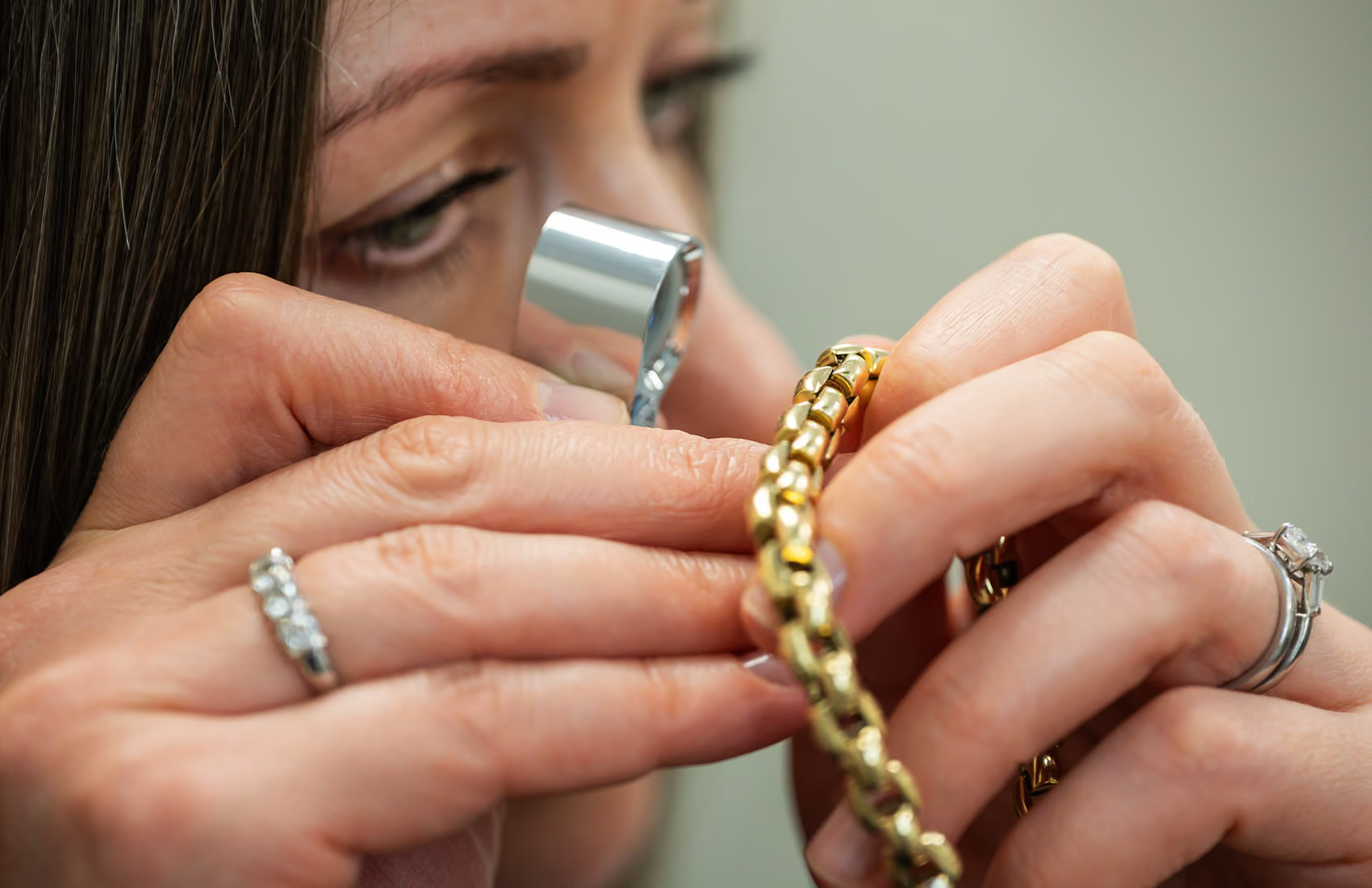

How do you know if gold is real? Whether you're considering selling your gold or using it as security for a loan, it's important to know whether your item is genuine. With many realising that now may be a good time to sell gold, you may be questioning if your item is a genuine real gold bracelet or gold Krugerrand coin.
This guide explains how to tell if gold is real: we will show you how to identify the gold hallmarks in the UK, and answer the question, "what can I use to test gold at home?"
When asking how can you tell if gold is real, checking the item for a hallmark is the first step. These stamps indicate metal purity but may vary in style for antique gold hallmarks or foreign gold hallmarks. You can verify the official UK standards by reviewing the government's British gold hallmarks guide. However, gold hallmark identification is not a guaranteed check, as these stamps can easily be forged. If you are considering selling gold, you should use these marks as an initial guide rather than a final guarantee.

Can you test gold at home? Yes. Whether you want to verify existing hallmarks on gold or you need to know how to tell if unmarked gold is real, there are several methods available. If you are checking real gold rings from a jewellery box or preparing to sell gold coins, these home tests can help provide an indication of your item's authenticity without having to buy a gold testing kit.

Is real gold magnetic? The answer is no. This makes using a strong magnet the easiest way to test gold at home. If the magnet attracts your item, it is not pure gold. However, when exploring how to tell if gold is real, keep in mind that other metals like brass, copper, and silver are also non-magnetic and therefore, you should only use this method to rule out obvious fakes.
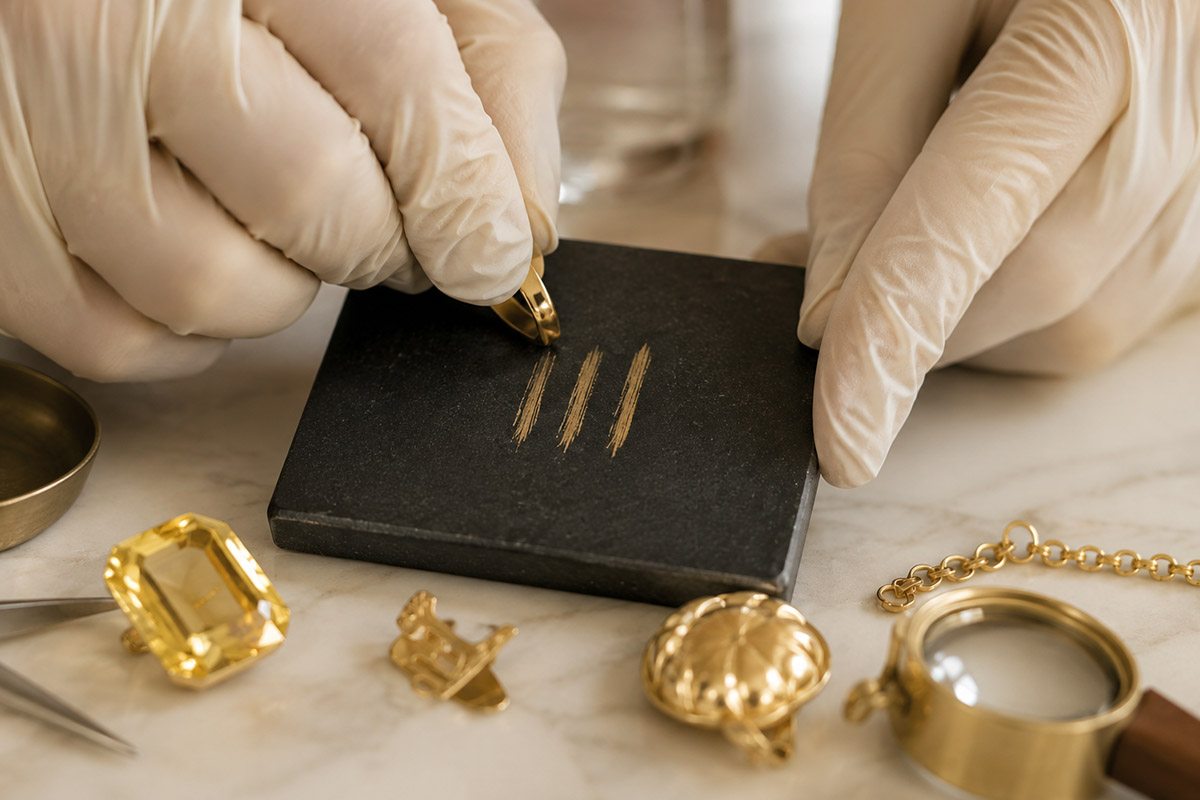
One of the oldest methods of testing for gold at home is the gold scratch test. Gently rub your item against an unglazed ceramic surface, such as the back of a tile or plate.
Because gold is a soft metal, real pieces will leave a visible golden streak. If your item leaves a black or grey mark instead, it is likely made from a base metal.
However, when learning how to tell if something is real gold, you should interpret these results carefully. Gold-plated items can also leave a golden streak. You must also use this method with caution because it requires scraping the metal; collectors generally avoid this test to prevent damaging valuable pieces. This is a great method when testing scrap gold that you are looking to sell at the gold spot price, and it doesn’t matter if there is slight surface damage to the item.
When learning how to tell if gold is real, a float test for gold is a good start. Gold is very dense, so genuine pieces will sink. If the item floats, it is not real.
For a more precise answer on how to check if gold is real, you can perform a gold specific gravity test, which is particularly helpful when prepping to sell gold bullion.
Acid gold testing, such as testing gold with vinegar, is a practical option to determine if your item is real solid gold. For this at home test for gold, apply a few drops of vinegar to your item. Genuine solid gold should not react to vinegar. However, lower carat gold, such as 9ct or 10ct, contains other metals that may cause minor surface reactions while still being genuine. If you notice significant discolouration or a strong reaction, it may indicate that the item is not solid gold.
Does acid testing damage gold? While vinegar is unlikely to damage solid gold, it may affect lower carat alloys, plated items or pieces with delicate finishes. For this reason, we do not recommend using the vinegar test gold method on valuable jewellery or investment pieces. If you need to confirm whether an item is genuine, a professional assessment is the safest option.

While home gold testing offers a convenient starting point when you want to know how to tell if gold is real, these gold test methods are not 100% guaranteed.
If you are wondering how you can tell if something's real gold with absolute certainty, especially before selling and pawning gold, you will need a professional assessment.
When learning how to spot real gold before you sell gold jewellery, checking for certain gold plating hallmarks like "GP" (gold plated) or "GF" (gold filled) indicate a piece is not solid gold.
If you are considering how to test if something is gold or plated at home, remember that surface methods have limitations. For instance, can gold plated jewellery pass the acid test? Yes, a thick outer coating can give a false positive. To be certain, a professional assay test for gold is required to assess the core metal. For more details on gold hallmarks symbols and how assay gold testing works, consult the London Assay Office guide.
{{resource-cta="/dev/components"}}
While home methods are a helpful starting point when learning how to check if gold is real, they only provide an initial indication. Professional testing remains the most reliable way to assess both the authenticity and purity of your items. How do pawn shops check if gold is real or how specialists verify pieces? Experts use advanced, non-destructive equipment, such as X-ray fluorescence (XRF) scanners, to determine the exact metal composition without risking any damage to your property.
If you require accurate gold testing in London, we are here to assist. Whether you are looking to secure a loan against gold or sell scrap gold, we test your gold free of charge as part of our valuation service to get you an accurate quote. To learn more about this process and how we authenticate your gold, please consult our full gold valuation guide.