According to Deloitte’s 2025 Art & Finance Report, published in November 2025, the art secured lending market has grown rapidly in recent years and is expected to continue growing through at least 2027. Deloitte’s report projects the market will grow to between US$42 billion and US$50 billion by 2027. Several factors drive growth, including softer art market conditions, growing awareness, better product options and improved risk management tools.
If we look back at Deloitte’s Art & Finance Report and the estimated growth of the global fine art lending market since 2021, the growth is substantial:
Year
Estimated market size (US$ bn)Market size
YoY estimated growthYoY growth
2021
24–28bn
10.7%
2022
26–31bn
9.8%
2023
29–33bn
8.2%
2024
30–36bn
6.6%
2025
34–40bn
11.8%
2026 (forecast)*
38–45bn
11.3%
2027 (forecast)*
42–50bn
11.7%
Estimated market size in US$ billions. *Forecast.
Source: Deloitte Private and ArtTactic Art & Finance Reports, 2021, 2023 and 2025. Market sizes are rounded to the nearest US$1 billion. The 2023 calculation combines different report editions and is indicative because estimates were revised.
To help you understand the fine art lending market in more detail, we have covered the key market dynamics below.
What is fine art lending?
Fine art loans are secured loans, which means collateral is required to complete the loan arrangement (in this case, the collateral is fine artwork). An unsecured loan, by contrast, is not tied to any personal or business assets, but is based on the creditworthiness of the borrower.
Art-secured loans are often considered an alternative way to raise liquidity without selling. Some borrowers prefer an art loan to an unsecured bank loan because, in many cases, it doesn’t impact their credit file. Art-backed loans offer many advantages, which we cover in this guide.
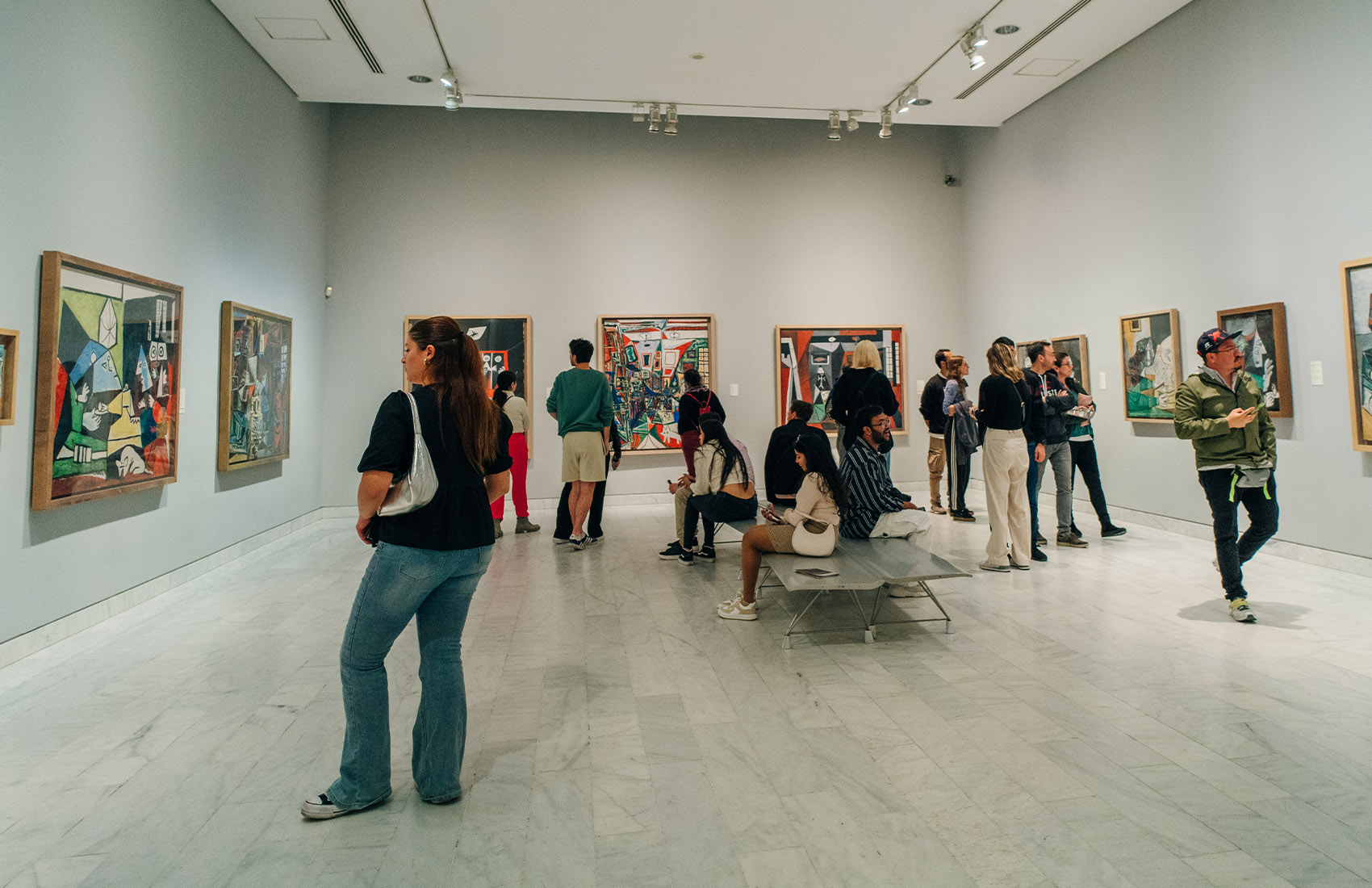
To illustrate how an art loan works, assume a collector owns a Picasso painting valued at £1m and could potentially borrow up to 60% of its value (£600,000). The borrower (whether a business or an individual) would then have to repay the interest and principal (the original loan amount), plus any fees, to settle the loan.
What is driving demand for art financing?
Demand for art finance is being driven by softer art market conditions, growing awareness among collectors and advisors, and a wider range of lending products.
This decline led many collectors to pause their sales plans, avoid selling into a declining market, and wait for a recovery. However, many collectors still require liquidity. A fine art loan is seen as a credible way to access liquidity from a relatively illiquid asset. This is the subject of Bloomberg's The Rich Can’t Sell Their Art, So They’re Borrowing Against It 2024 article.
Our insight: This aligns with what we saw from clients approaching us through 2024 and 2025. However, this changed in 2026, with collectors approaching us more frequently for our sale advance loan offering.
Growing awareness of art loans
Awareness of art loans has grown over the last decade, particularly in the USA, where the art finance market is more established. Financial intermediaries, including wealth managers, are increasingly considering how clients can use their art collections to access funding as part of wider financial planning.
Art can represent a large share of high-net-worth (HNW) individuals’ wealth. According to UBS’s report on the changing global art market, surveyed HNW collectors held an average of 20% of their wealth in art in 2025, up from 15% in 2024. This rose to 28% among collectors with more than US$50 million in assets, highlighting the importance of considering art alongside their other assets.
Our insight: The art finance market is mature in the USA, while Europe and the UK offer further scope for growth as awareness and access to art financing improve.
More art finance product options
A wider range of art lenders and products now cater for different borrowing amounts, needs and locations. Options include short-term bridging loans, advances ahead of artwork sales, acquisition finance and longer-term credit facilities secured against collections.
Art finance is also increasingly offered at the point of sale by auction houses, introducing collectors to borrowing options when buying or selling artwork.
The best option depends on your circumstances, borrowing needs, and repayment plans. We compare the providers and products in the ‘Art financing companies and loan terms compared’ section below.
Types of companies providing art finance
The 2025 Deloitte report estimates that private banks account for 77% of outstanding art loans by value. This measures the amount lent, not the number of borrowers or loans. The distinction matters because pawnbrokers and luxury asset lenders generally provide smaller loans, so their share by number of loans could be higher. However, the report does not provide that breakdown.
Type of lender
Estimated share of art loans by valueShare by value
Private banks
77%
Luxury asset lenders
12%
Auction houses
11%
Estimated share of outstanding art loans by value.
Source: Deloitte Private and ArtTactic Art & Finance Report 2025, Figure 127, p.344.
Individual collectors account for around 90% of outstanding art loans by value, which may reflect private banks’ focus on high-net-worth clients. Based on our experience, possible explanations for galleries' and dealers' smaller share include:
Borrowing costs that make selling more financially viable than borrowing
Limited awareness of art finance options
Lenders' storage requirements, which can prevent artwork from being displayed to potential buyers
Borrower type
Estimated share of art loans by valueShare by value
Individual collectors
90%
Galleries and dealers
10%
Estimated share of outstanding art loans by value.
Source: Deloitte Private and ArtTactic Art & Finance Report 2025, Figure 127, p.344.
Why do collectors borrow against fine art?
Collectors borrow against art for a range of reasons. Deloitte’s 2025 Art & Finance Report identified these motivations amongst surveyed collectors:
Investment in other business activities (64%)
Buying more artworks (60%)
Funding other personal activities or interests (38%)
Estate planning (20%)
Refinancing other loans (16%)
Respondents could select multiple reasons, so the percentages do not total 100%.
Source: Deloitte Private and ArtTactic Art & Finance Report 2025, Figure 152, p.379.
Short-term art loan use cases
Our own data provides a more specific picture of UK short-term art lending, including funding for property transactions, business cash flow and acquisition finance. The analysis below draws on anonymised enquiries and completed loans where clients voluntarily shared their intended use of the funding. Some clients choose not to share this information, and we do not ask.
Use case
Description
Share of total (%)
Property transactions
Funding a property purchase or renovation or bridging a gap while waiting for a property sale.
20%
Business working capital
Using personally owned artwork to raise short-term working capital for their business.
15%
Acquisition finance
Leveraging an existing collection to fund further art purchases at auction or private sale.
15%
Sale advance funding
Accessing funding ahead of a planned auction or private sale.
30%
Other
Funding investment opportunities, tax bills, school fees or other needs, including borrowing while waiting for better conditions to sell.
20%
Percentages show the share of cases where the intended use was disclosed.
Source: Our anonymised UK enquiry data and completed art loan data for January 2025 - June 2026, covering cases where the intended use was disclosed.
Long-term art loan use cases
Some short-term needs also apply to longer-term borrowing, such as business investment. In our short-term data, business investment falls under ‘Other’ because it accounts for a smaller share of cases, but it is a more common reason for longer-term borrowing, so we have listed it separately below. Additional long-term use cases include estate planning and portfolio diversification. Although we do not provide long-term financing as a high-end pawnbroker, we regularly receive enquiries from financial intermediaries with clients in these situations.
Use case
Description
Estate and inheritance planning
Accessing funds to meet costs associated with inheritance, helping avoid a rushed sale of artwork.
Portfolio diversification
Releasing capital tied up in an art collection to invest in other assets while retaining ownership of the artwork.
Business investment
Borrowing against a collection to fund a business investment where the anticipated return exceeds the borrowing costs.
Art financing companies and loan terms compared
We have grouped art-lending companies into four categories and summarised their key offerings in the table below.
Luxury asset lenders
Luxury pawnbrokers
Major auction houses
Private banks and fine art advisory firms
Luxury asset lenders
Luxury pawnbrokers
Major auction houses
Private banks & art advisory firms
Loan amount
£75,000 to £2m
£30,000 to £100,000
£1m to £250m
£1m to £250m
Speed
1 to 10 days
1 to 3 days
4 to 6 weeks
6 to 8 weeks
Term
Up to 2 years
6 or 7 months
1 to 3 years
1 to 10 years
Rates
2% to 4% a month
3% to 4% a month
1% a month
1% a month
Loan to value
Up to 70%
Up to 60%
Up to 50%
Up to 50%
Fees
0.5% to 2%
No fees
0.5% to 2%
1% to 3%
Luxury asset lenders
Loan amount£75,000 to £2m
Speed1 to 10 days
TermUp to 2 years
Rates2% to 4% a month
Loan to valueUp to 70%
Fees0.5% to 2%
Luxury pawnbrokers
Loan amount£30,000 to £100,000
Speed1 to 3 days
Term6 or 7 months
Rates3% to 4% a month
Loan to valueUp to 60%
FeesNo fees
Major auction houses
Loan amount£1m to £250m
Speed4 to 6 weeks
Term1 to 3 years
Rates1% a month
Loan to valueUp to 50%
Fees0.5% to 2%
Private banks & art advisory firms
Loan amount£1m to £250m
Speed6 to 8 weeks
Term1 to 10 years
Rates1% a month
Loan to valueUp to 50%
Fees1% to 3%
Source: Indicative figures compiled from selected lenders in each category. Actual terms vary by provider and individual circumstances.
The best option depends on these variables:
Loan amount - how much do you need to borrow against your artwork?
Speed - how quickly do you want to be paid?
Terms - how long do you need the money for, and at what cost?
Repayment - what is your plan to repay the loan?
Use case - are you looking to sell, buy or retain your art?
Our insight: Each art financing company has its pros and cons. The best option depends on your circumstances. Loans from all these companies wouldn’t exist if they didn’t each serve a niche in the market.
Why use a luxury asset lender for art loans?
Loan amount - Loans typically start around £75,000, higher than pawnbrokers, making them a good fit for mid-range works by blue-chip artists.
Speed - Loans can usually be arranged within 1 to 10 days. As each agreement is tailored to the borrower, the process can be slightly more thorough than a standard pawnbroking loan.
Terms - Agreements are typically bespoke, allowing for sale advances, longer loan terms, and more complex borrowing needs. Costs may be lower than those of pawnbroking, depending on the amount, duration, and fees. Some luxury asset art lender agreements use the high-net-worth exemption from consumer credit regulation. This requires certified financial eligibility, based on net income of at least £150,000 in the previous financial year or qualifying net assets of at least £500,000 throughout that year, alongside other conditions.
Repayment - Borrowers should have a clear repayment source, such as an artwork sale, a property transaction, or business income. The agreement sets out when interest and principal payments are due and whether the loan is recourse or non-recourse, which affects liability if the artwork's sale proceeds do not cover the debt.
Best for - Collectors seeking a loan of between £75,000 and £1m, with quick funding, more flexible terms (such as longer terms and higher loan-to-value ratios), and agreements tailored to their needs.
Why use a luxury pawnbroker for borrowing against art?
High street pawnbrokers rarely lend against fine art, but specialists with in-house art expertise, such as Suttons & Robertsons, do.
Loan amount - Art loans from pawnbrokers typically start from £30,000, compared with the £1m that auction houses and private banks require. The more you borrow from a pawnbroker, the lower the interest rate tends to be.
Speed - Luxury pawnbrokers are built for accessing a large amount of money quickly for a short period of time. Their lending criteria for artwork can be strict, but eligible loans can be approved in as little as one to three days, making them the quickest option.
Terms - Pawnbroking loans run on a standard 6 or 7 month contract, which, in the UK, is regulated by the FCA and gives borrowers more protection. You can repay early with no penalty, and you would only pay the interest accrued to that point. Bespoke agreements are still covered by UK law but usually with less protection.
Repayment - Pawnbroking is a short-term financial solution, not a long-term one. Borrowers usually have a clear exit plan in place, with liquidity expected to improve before the end of the 6 or 7 month term, so they can repay the loan.
Best for - Fast funding of between £30,000 and £100,000 for a short-term period. Borrowing costs are higher than longer-term options, reflecting the speed of funding and flexibility. It is also the simplest art loan agreement, making it a good choice if you prefer to avoid the more complex structures offered by other lenders.
Why use an auction house for art secured loans?
Loan amount - Loans typically start at around £1m, far higher than those offered by luxury asset lenders or pawnbrokers. They serve a different market and suit top-tier artworks by blue-chip artists. Their main offering caters to one specific use case: clients looking to sell artwork, and they offer this through a consignment advance (also known as a sale advance loan). Auction houses sometimes offer other art loan products, though most loans they complete are advances ahead of sales.
Speed - Borrowers may need funding quickly, even when the planned auction is several months away. However, auction house loans take longer to arrange than those from pawnbrokers or luxury asset lenders because they require valuation, due diligence, and documentation.
Terms - Loans can be structured around the planned sale of your artwork. Interest rates are generally lower than those of luxury asset lenders and pawnbrokers, but the loan is best suited to art sellers. Agreements are not usually FCA-regulated. And because the lender is also an auction house, there is a potential conflict of interest.
Repayment - For consignment advances, repayment usually comes from the sale proceeds. If the artwork doesn't sell, the client may have to repay the loan (principal and interest), or the artwork may be allocated to a different auction. Check the agreement's terms and conditions to understand what happens if the artwork doesn't sell.
Best for - For owners of very high-value pieces who plan to sell at auction and want to access funds before the sale, it is worth comparing offers from several auction houses and considering luxury asset lenders that provide advances on sales below £1m.
Why use a private bank or art advisory firm for art loans?
Loan amount - Loans typically start from £1 million and go up to £250m. These loans are usually suitable for “museum-quality” artworks (think Monet). They generally target ultra-high-net-worth individuals with wealth managers and are mainly used for longer-term funding.
Speed - Private banks are known for their lengthy due diligence and loan underwriting process, which can be off-putting for some borrowers. From a risk-management perspective, this level of due diligence is expected for extremely high-value pieces. It can take 6-8 weeks to complete.
Terms - Private bank and art advisory art loans are designed for longer-term financing. Loans typically average around 3 years but, subject to revaluations, can run for as long as 10 years, which other lenders don't offer. The loan underwriting process will also often involve a financial analysis of the borrower, such as credit checks, affordability checks, and more. The interest rates are often lower than the options above, though they may be variable (linked to bank interest rates) rather than fixed.
Repayment plan - Typically, art loans from private banks are interest-only, as with the other examples in this guide, with full repayment due at the end of the loan term rather than in gradual instalments. However, some art loans offered by private banks may be structured as amortising, with interest and principal repaid in different proportions over time. Because private bank loans are generally longer-term, they may require annual revaluation. If the artwork has decreased in value, you may have to repay that portion of the loan, or restructure the loan agreement. Sometimes they can be structured as lines of credit and operate similarly to an overdraft.
Best for - Art collectors with a wealth manager who has a holistic view of their finances and helps with long-term planning, such as portfolio diversification. This is a very different service from what pawnbrokers, luxury asset lenders and auction houses offer.
Art finance loan products
Art loan product
Summary
Art financing company
Pawnbroking loans
Borrow against your fine art with a standard FCA regulated pawnbroking loan, which usually runs for 6 or 7 months. The pawnbroker holds the artwork securely until you repay the loan and accrued interest, when it is returned to you.
Art financing company
Luxury pawnbrokers
Bridge loans
Borrow against your fine art for up to two years for personal or business purposes, with a bespoke agreement tailored to your circumstances. Also known as an ‘art equity loan’.
Art financing company
Luxury asset lenders, auction houses, private banks
Line of credit loans
An art-backed credit facility works similarly to an overdraft, allowing borrowers to draw funds up to an agreed limit when needed. Often offered by private banks, it may allow the borrower to keep possession of the artwork, subject to the lender’s terms.
Art financing company
Private banks
Sale advance loans
Also known as ‘consignment loans’, these provide funding ahead of an artwork sale, with repayment from the sale proceeds.
Art financing company
Luxury asset lenders, auction houses
Acquisition loans
Finance the purchase of artwork from a gallery or auction house, including instalment or ‘buy now, pay later’ options.
Art financing company
Luxury asset lenders, auction houses
How the art lending process works
Preliminary appraisal - Share details of the artwork you want to borrow against, including the artist, provenance, photographs, auction records, and any supporting documentation.
Valuation and offer - The lender assesses the artwork and provides an indicative offer based on its auction-based or resale valuation. In-house appraisers, auction house specialists, and art market intelligence data usually finalise the valuation.
Due diligence - The lender verifies ownership, provenance and authenticity. Depending on the lender and loan structure, checks may also cover your financial circumstances.
Agreement - You receive a loan agreement setting out the amount, interest rate, fees, repayment arrangements and other terms for review.
Logistics - Storage, transport and insurance are arranged where required. Artwork already in an approved specialist storage facility may be able to remain there. Some arrangements allow you to retain possession, depending on the lender, jurisdiction and loan structure.
Funding - Once the agreement is signed and all requirements are met, the funds are transferred to the client’s bank account.
The process is similar across companies; the main difference lies in how quickly each provider can operate.
Art lending market challenges
1. Art lending in different jurisdictions
Physical possession - A key difference between the UK and the US is whether borrowers can retain possession of their artwork. In the US, lenders can register a security interest under the Uniform Commercial Code (UCC), allowing collectors to retain their artwork, subject to the lender’s terms. In England and Wales, lenders commonly require that individually owned artwork be held by them or an approved storage provider. Borrower protections also vary by jurisdiction and loan structure.
Legal complexity across Europe - Different countries across Europe have different security and enforcement rules. This makes expanding a lending service across European markets more complex.
Storage and cross-border costs - When artwork needs to move, transport, insurance, storage, export permissions and potential import taxes can add to costs and cause delays.
Our insight: In the UK, artwork is usually held in secure storage for the duration of the loan, which can deter some collectors. In the US, borrowers can often retain possession of their artwork and continue to display it.
2. Art provenance and proof of ownership
Before lending against artwork, lenders need to identify the owner and understand the ownership history, as forgeries are a known risk in the art market. Auction provenance provides reassurance that the piece is genuine, though not always.
This information may still be held in paper records if the piece hasn’t been sold recently, particularly when works have been held privately for decades and passed down through families. Missing documents, gaps in provenance, or conflicting records can make verification harder, delay a loan, or prevent a lender from accepting the artwork.
3. Art valuation risk and limited liquidity
Fine art does not have a single, readily observable market price. Valuations depend on the artist, condition, provenance, comparable sales and current demand. Different appraisers may reach different conclusions, especially where comparable works rarely sell.
Art market databases and valuation tools can help lenders compare sales and identify trends. However, private sale prices are not always available, and differences between individual artworks mean expert judgement remains important.
4. Managing art valuation expectations
For artwork purchased at auction, a lender’s valuation may be closer to the client’s expectations. However, gallery retail prices include a margin and services, while lenders typically base their valuations on auction estimates or a conservative assessment of resale value.
This can create a gap between what a collector expects to borrow and what they receive. Explaining the valuation basis, likely selling costs, and loan-to-value ratio helps clarify the difference.
Fine art lending due diligence
Art lenders are often selective about what they accept, and some run checks on the individual. All lenders differ and use different risk-management approaches.
Fine art checks
Possible checks the art lender may do on the artwork being used as loan collateral:
Type of artwork – most lenders prefer flat fine artwork by blue-chip artists. Example artists are Picasso, Banksy, and Andy Warhol. Works sometimes need to be verified with the artist’s foundation, if one exists.
Provenance – proof of a track record of the sale at auction or via a gallery is key. Most lenders will not lend against artwork without a complete, transparent provenance history.
Condition and restoration checks - Assess damage, repairs and restoration that could affect the artwork’s value and suitability as collateral.
Physical location – The jurisdiction and the governing laws determine whether the lender will lend there, as the lender will want to eliminate this risk.
Valuation monitoring – The lender may monitor the valuation during the loan and require regular revaluations to help mitigate risk. This is less important for pawnbroking loans, which usually run for 6 or 7 months, and shorter luxury asset loans, as valuation risk is lower over a shorter term.
The art market is illiquid, so valuations can fluctuate significantly. To mitigate that risk, many art lenders will request multiple valuations from different experts and lend at a percentage of the average valuation. That gives the lender confidence they can recoup the amount owed if the client is unable to repay.
Our insight: As a luxury pawnbroker, our due diligence checks on fine art loans are more rigorous than for other luxury assets, given the art market and industry issues. We often must turn down art loan enquiries because of authenticity challenges, lack of provenance, or, most frequently, because the artist isn't well known enough or doesn't have an auction track record.If you compare artwork to another luxury asset that high-end pawnbrokers offer loans on, such as luxury watches, gold, and jewellery, it is significantly more illiquid and takes longer to sell at auction if the loan was to default.
Personal or business checks
Possible checks the art lender may do on the borrower (individual or business):
ID verification – A common KYC (know your customer) check used to confirm the person is who they claim to be by matching their identification against online databases.
PEP and sanctions checks – Checks used to identify whether a person is a politically exposed person or sanctioned, helping mitigate financial crime.
Insolvency checks – Checks whether an individual or business is currently bankrupt or has been declared bankrupt in the past.
Affordability checks – Checks such as income verification to confirm income and assess whether the borrower can repay the art loan.
Credit checks – Check your financial history using information held by credit reference agencies. There are two versions: soft and hard checks.
Assets and liabilities – Checks on your other assets, outstanding debts and financial commitments, if the loan is a recourse art loan.
Guarantor checks – Some art lenders may allow a guarantor who agrees to pay the loan if the borrower does not. The lender may run background checks if the art agreement allows it.
Our insight: The checks carried out depend on the lender and their due diligence process. Generally, private banks undertake more comprehensive personal or business checks during their due diligence processes than luxury asset lenders, which is one reason their process is longer.
Frequently asked questions
How is the fine art loan interest rate determined?
Luxury pawnbrokers often follow an interest rate card, where the interest rate is determined by the loan value. However, the interest rates and fees charged on other art loan products often reflect the risk involved in the agreement. There are often key factors influencing them:
Recourse vs non-recourse - Recourse art loans may have lower interest rates, as they're de-risked to some extent from the lender’s perspective.
Storage and logistics - If the artwork needs to be moved to a specialist storage facility (i.e., it's not currently in one), there may be a fee charged for that. Storage costs may also be factored into a fee, usually as a percentage of the loan value or a fixed fee.
Interest servicing - Interest on art loans is often either serviced monthly (i.e., the client must make an interest payment monthly throughout the loan term) or just at the end of the loan term. When the loan is due, the client must repay the principal plus accrued interest and fees. If the interest is serviced monthly, that may be a lower risk to the lender.
Asset concentration - Many art-secured loans are secured against collections of artworks rather than individual pieces. From a concentration perspective, a single loan with multiple pieces of artwork may be considered less risky than a single loan with just one piece of artwork. If you own other luxury assets, such as jewellery, watches, or gold, and combine this with an art loan, that may de-risk it further.
Artist - Art-secured loans against blue-chip artists such as Picasso may be seen as much less risky than those against a more obscure artist.
How is the interest repaid on an art loan?
Art pawnbroking loans in the UK are typically repaid in a single payment covering the principal (the original amount borrowed) and accrued interest. Borrowers can repay early and may make partial repayments during the term, subject to the lender’s terms. At the end of the term, they repay the outstanding balance or seek to renew or refinance the loan, subject to approval. Where the agreement is non-recourse, the lender cannot pursue the borrower for any shortfall if the artwork is sold for less than the amount owed.
However, some art loans are structured differently and may be partly or fully amortising, meaning you make regular repayments, with a portion going toward interest and the principal balance over time. This is why it's very important to understand the art loan agreement’s terms and conditions before proceeding.
Are art loans always non-recourse loans?
An art-secured loan can be either recourse or non-recourse. A non-recourse loan is secured solely by the artwork, and if the borrower cannot repay, the lender has no legal right to seize other personal assets if it can’t recover the full debt by selling the artwork. By contrast, with a recourse loan, the lender can attempt to seize other assets owned by the borrower if the fine art collateral fails to cover the full debt. In the art lending world, both options are available from different providers.
Do you have any fine art case studies?
Please refer to our fine art loan page to view our latest case studies, though very short summaries are:
Artist
Artwork
Loan amount
Purpose
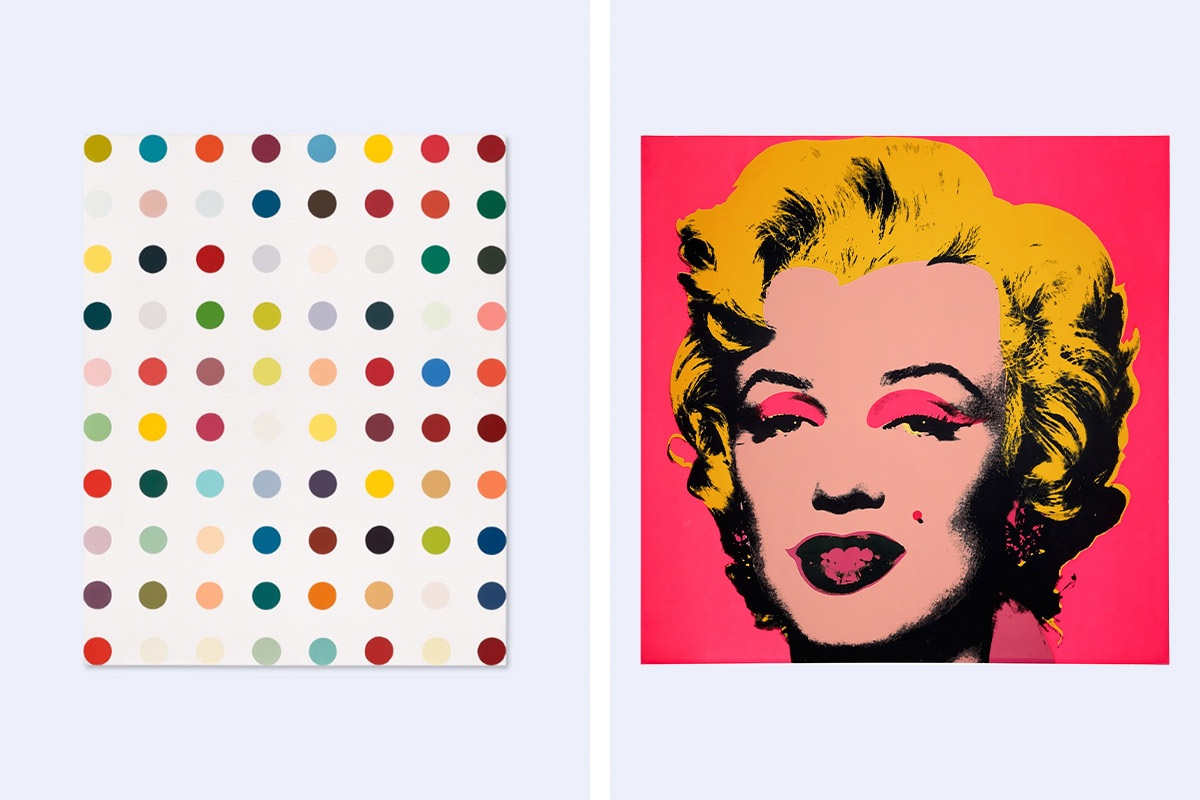
Andy Warhol
Artwork
Marilyn Monroe
Loan amount
£85,000
Purpose
Property transaction
Damien Hirst
Artwork
Spot painting
Loan amount
£350,000
Purpose
Sale advance funding
Damien Hirst Spot Painting (left) & Andy Warhol Marilyn Monroe painting (Right)
What type of art does each lender accept as collateral?
These broad segments are illustrative, with overlapping values. The amount available to borrow will be a proportion of the lender’s valuation.
Segment
Valuation range
Example
Art financing company
Museum tier artworks
Valuation range
£50m to £250m+
Example
Shot Sage Blue Marilyn (1964) by Andy Warhol sold at Christie’s for around £155m in 2022
Art financing company
Auction houses, private banks
Unique mid-tier artworks
Valuation range
£500,000 to £10m
Example
Untitled (Drawing, 1983) by Jean-Michel Basquiat for around £2m
Art financing company
Luxury asset lenders, auction houses, private banks
Premium edition artwork
Valuation range
£100,000 to £1m
Example
Signed Campbell’s Soup Can screenprint (1 of 250) by Andy Warhol (£100,000 to £300,000)
Art financing company
Luxury asset lenders, luxury pawnbrokers
Higher volume edition artwork
Valuation range
£50,000 to £100,000
Example
Unsigned prints or lithographs printed in large editions by Picasso, such as the Picasso Exhibition Poster (1957), usually selling for around £10,000
Art financing company
Luxury pawnbrokers
If you think pawning fine art is the right option for you after reading this article, please feel free to contact us today.
Resources
Insights & guides
Guide
Art finance explained: loans, lenders and market trends
Explore the growing global art-secured lending market, forecast to reach US$42–50 billion by 2027, and the dynamics of fine art collateral loans.
Top 10 watch brands to secure a watch loan in London
Discover the top brands for watch loans in London. Explore Rolex, Patek Philippe, Omega and more pawn watch loans with discreet trusted pawnbrokers like us.
Artificial intelligence is reshaping industries but pawnbroking is different. We use AI to make our services faster and more accurate but you will only ever deal with humans.
Our guide explains the difference between pawn shop loans and other short term loans. Learn what they are, how each works and which loan type is right for you.
Discover ten unique items you can pawn for quick cash, from rare sports memorabilia to handbags. Unlock pawn loan funds instantly with valuable assets.
The pawn gold price per gram in the UK in 2026 is reaching record highs. Our Sell Gold and Pawn Guide will help you realise the value of your gold assets.