Selling jewellery at auction vs jewellers, pawnbrokers & marketplaces
Compare selling jewellery at auction with selling jewellery to a jeweller, luxury pawnbroker or online marketplace. Fees, payment times and which route suits your piece.


Compare selling jewellery at auction with selling jewellery to a jeweller, luxury pawnbroker or online marketplace. Fees, payment times and which route suits your piece.


There is no single best place to sell jewellery. For an exceptional signed jewel worth tens of thousands of pounds, a major international auction could attract competing collectors and achieve an outstanding result. For a modern Cartier bracelet, gold jewellery or a diamond ring, selling directly to specialist jewellers or luxury pawnbroker may be quicker, simpler and ultimately more suitable.
The best option depends on six things: what your jewellery is worth, how quickly you want to be paid, selling costs, certainty of sale, the amount of work involved and, importantly, the item itself.
For high-value jewellery, the four main routes are auction houses, specialist dealers or jewellers, luxury pawnbrokers and online marketplaces.
These are not rigid rules. A £10,000 piece could suit several routes. The question is what you value most: the possibility of a higher eventual return, or a competitive amount that is certain and available now.
Lower-value jewellery creates a different calculation. General marketplaces such as eBay or Vinted can make more sense for costume jewellery and fashion pieces where using a specialist intermediary would add little value.
Selling jewellery at auction can produce exceptional results, but it is one of the most misunderstood ways of selling jewellery.
When an auction house accepts an item, a specialist normally gives it an auction estimate. This is a range indicating what they expect it to achieve, rather than a guaranteed sale price. A reserve may then be agreed. This is the confidential minimum price at which the item can sell and will normally sit at or below the low estimate. If bidding fails to reach the reserve, the jewellery remains unsold.
If bidding is competitive, the opposite can happen. Two or more determined buyers can drive an exceptional piece considerably beyond its estimate. That competitive tension is where auction has its greatest advantage.
Auction costs vary by house, so there is no single percentage to use. Seller’s commission is deducted from the hammer price, while the buyer’s premium is paid on top by the winning bidder. The total buyers and sellers fees can be up to 40%.
Auction is also rarely a quick-sale option. Jewellery must be accepted, catalogued and allocated to a suitable sale before the auction takes place, with payment following once the buyer has settled. The full process can take several weeks or months.
Auction works best when competitive bidding could push an exceptional piece beyond what a conventional buyer might offer, such as, rare jewellery, higher value investment jewellery, exceptional period pieces, or important estate jewellery pieces or collections.
We have used major international auction houses ourselves for certain exceptional pieces. On one occasion, a piece we consigned achieved around twice its high estimate, showing the potential upside when several collectors compete. That does not mean auction is best for every item. For a more typical £2,000 - £3,000 designer piece, a direct sale may be quicker, simpler and more appropriate.
Selling jewellery to a jeweller offers more certainty than auction because the jeweller buys the piece directly and agrees a price with you.
However, not every jeweller buys pre-owned jewellery or has expertise in every category. High-street retailers, independent jewellers and antique dealers can value the same piece very differently.
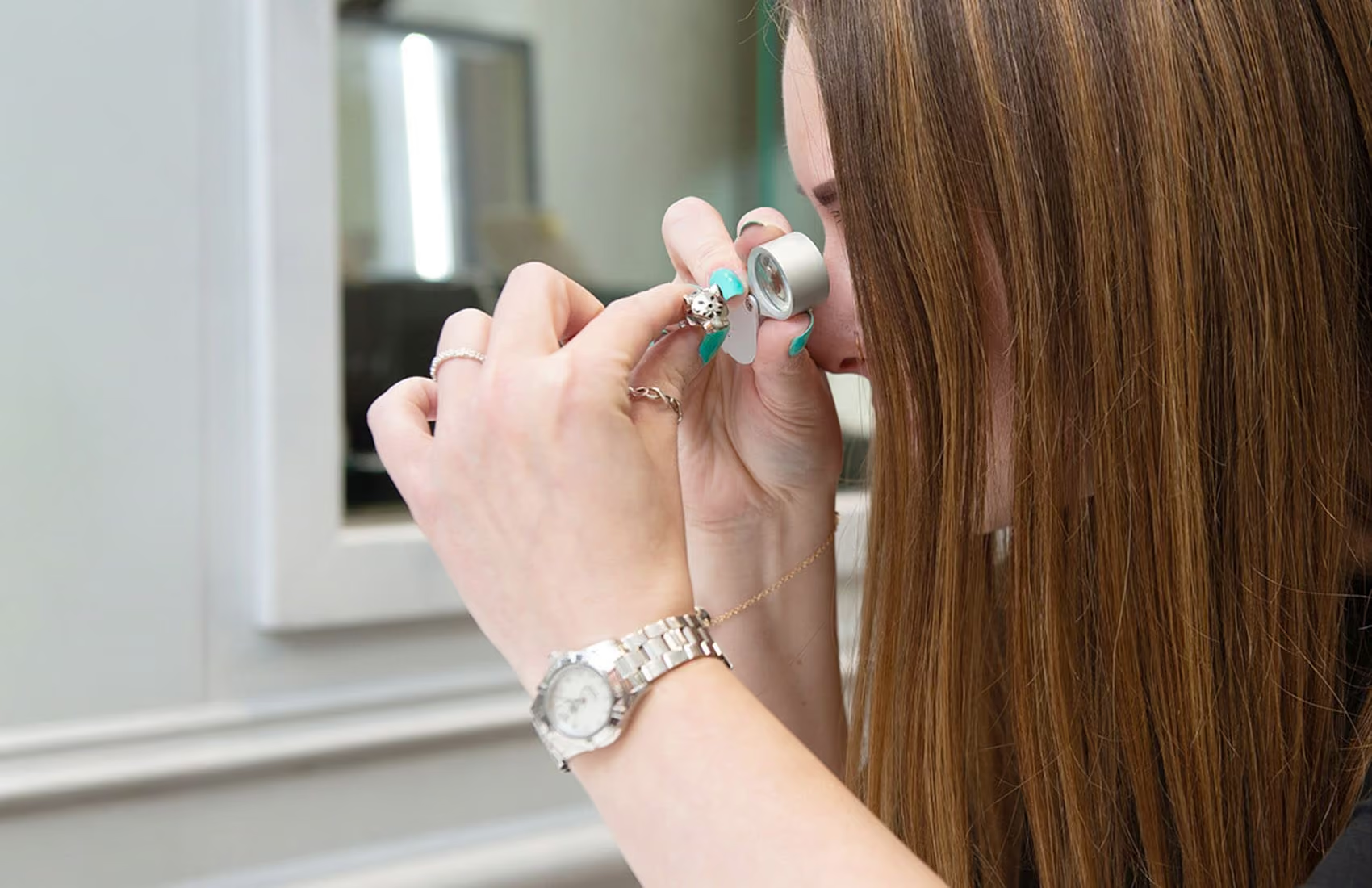
The key question is whether they regularly buy and resell jewellery like yours. A specialist antique dealer may better understand a period piece, while a luxury jewellery buyer may recognise more value in a Cartier bracelet than a business focused mainly on gold weight. Expertise can have a direct impact on the offer.
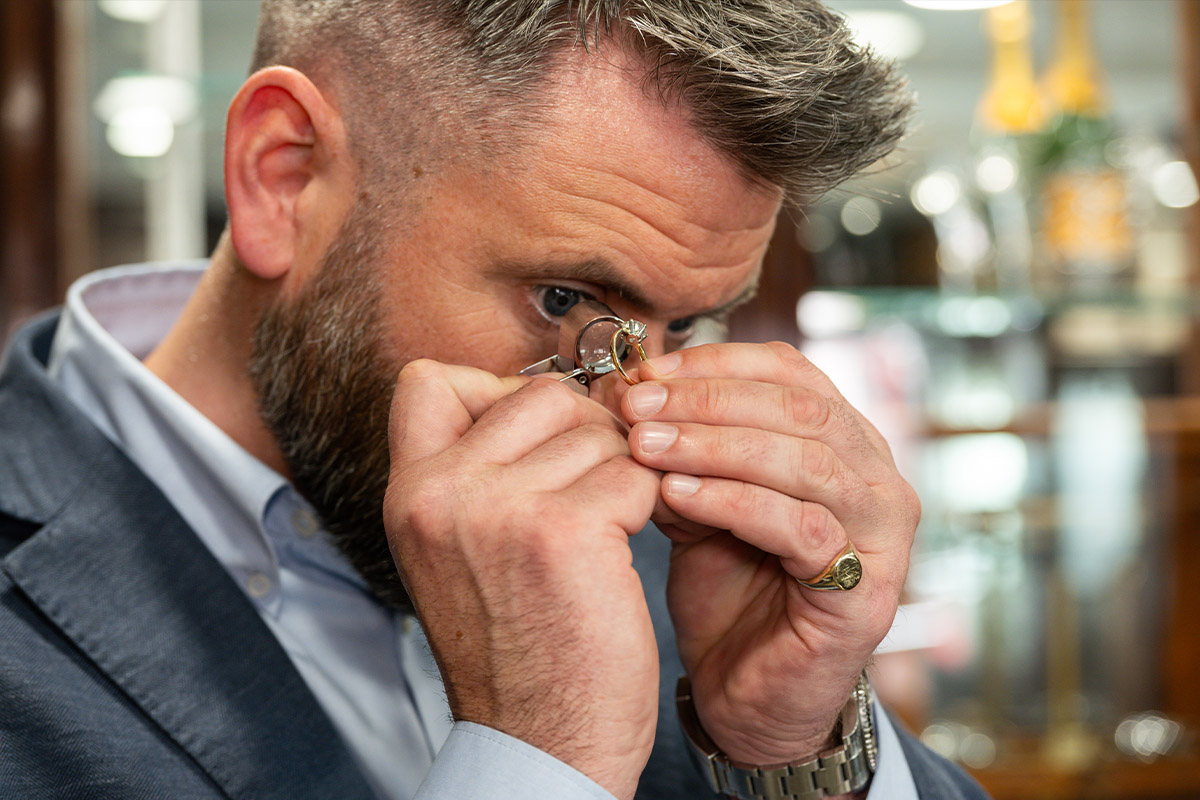
There is a common assumption that selling jewellery to a pawnbroker automatically means receiving a low price, but there is an important distinction between a general high-street pawn shop and a specialist luxury pawnbroker.
A luxury pawnbroker will value jewellery based on brand, collection, condition and resale demand, rather than simply gold weight like a high street pawn shop may. In practice, this can make their service identical to that of a specialist jewellery buyer. Often a high end pawnbroker may even offer you more than a specialist jewellery buyer would. What matters most is how the piece is valued and the offer you actually receive.
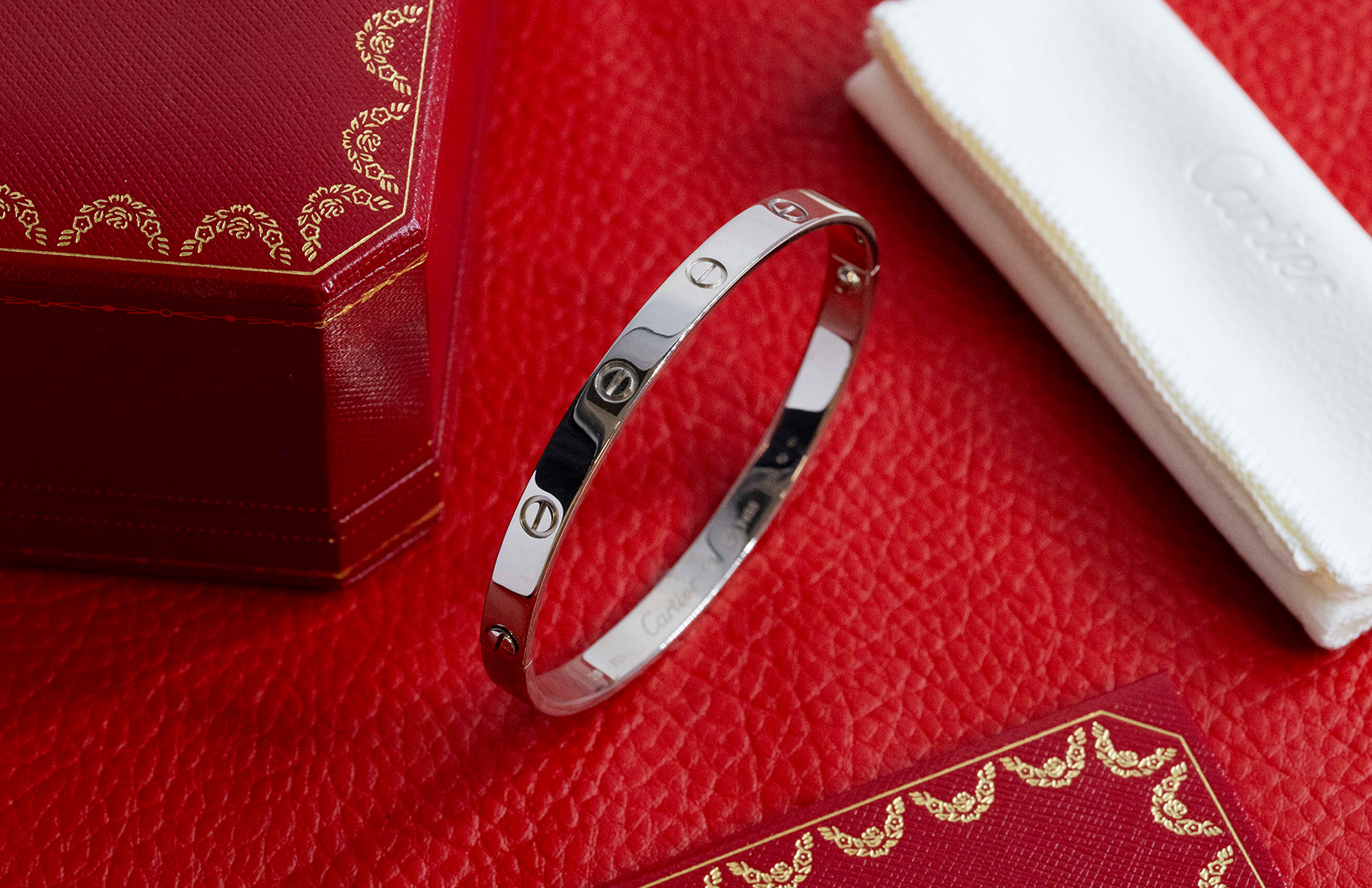
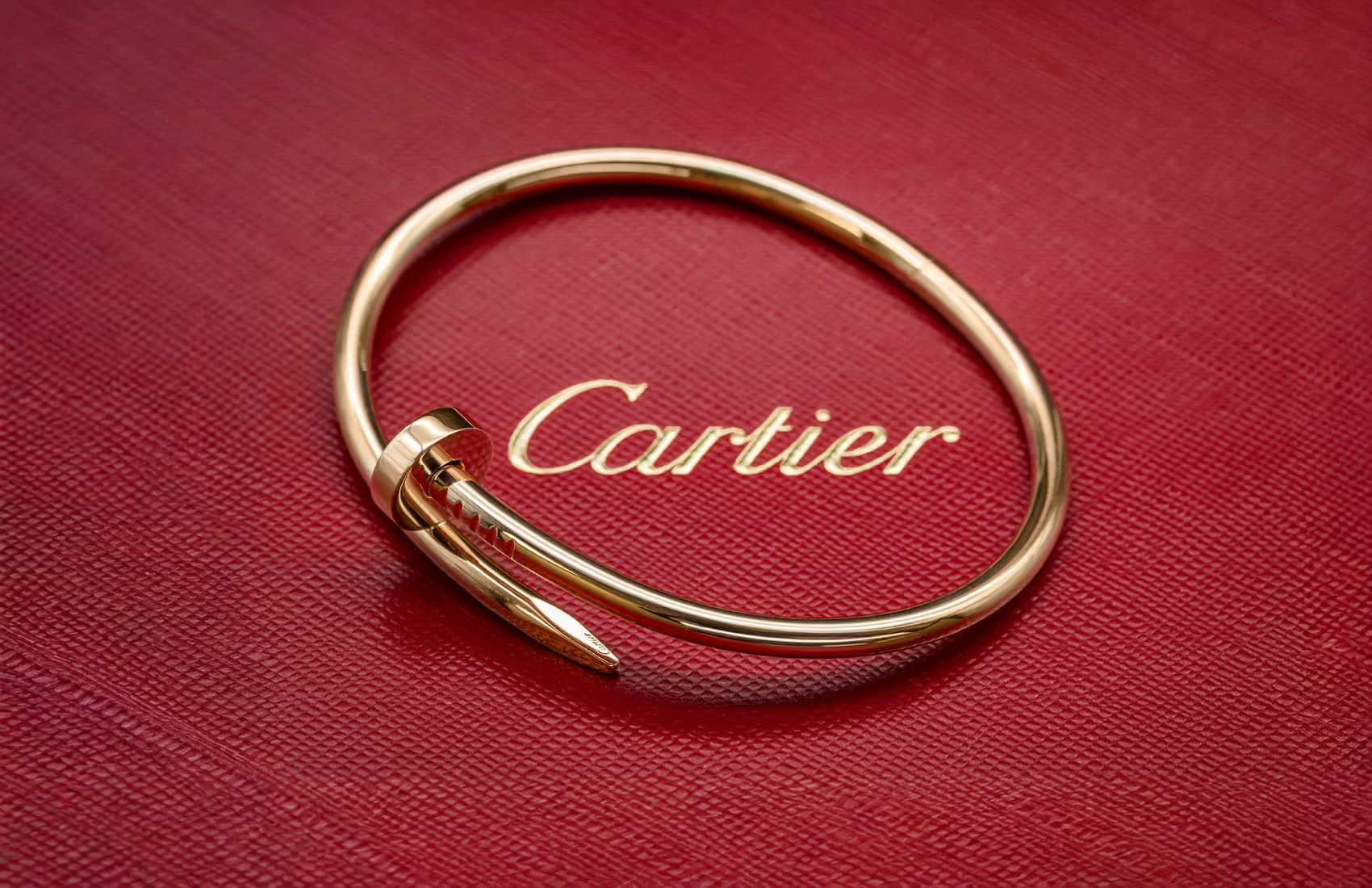
A Cartier Love bracelet, for example, is valued not just for its gold content, but also its brand, model, condition, size, age, box, paperwork and current demand. Our analysis of more than 2,000 jewellery transactions found that brands such as Cartier and Van Cleef & Arpels can retain a substantial proportion of their original retail value. Our jewellery resale value report covers what we pay out on branded jewellery.
Some specialist jewellers and luxury pawnbrokers offer both outright purchase and consignment. With consignment, the business sells the jewellery on your behalf and you receive an agreed share of the final sale price. The potential return can be higher, but payment takes longer and a sale is not guaranteed.
We found that only around 10% of clients choose consignment. Most people decising between an outright sale vs consignment sale prefer the speed and certainty of an outright sale when the immediate offer is competitive. Neither option is always better. The choice comes down to whether you prioritise maximum potential return or a guaranteed sale now.
Online marketplaces can remove the middleman and allow an owner to market jewellery directly to a buyer. That sounds like the obvious route to achieving more money, but there is an important distinction between asking price, selling price and what you eventually receive.
A Cartier bracelet advertised online for £6,000 has not necessarily established a £6,000 market value. It may sell tomorrow, after several price reductions, or not at all. Completed transactions are therefore considerably more useful than unsold listings when researching the value of jewellery.
General marketplaces such as eBay are easy for private sellers to access, and UK private sellers pay no transaction fee. This can work well for lower and mid-value jewellery, but you manage the entire sale yourself, including pricing, photography, descriptions, buyer questions, authenticity, shipping and waiting for a buyer.
Specialist luxury marketplaces offer a more targeted audience for designer jewellery, but usually charge higher fees. Compare seller fees, authentication, shipping, returns, access requirements and likely time to sale with what you could receive from a direct buyer. Vestiaire Collective, for example, charges UK private sellers a selling fee plus payment-processing fees on most qualifying sales. Access also varies by platform. 1stDibs is aimed at approved professional sellers, so it is not a straightforward option for someone selling a single personal item.
For a £200 item, the extra effort may be worthwhile. For a £20,000 diamond ring, the risks and workload are much greater.
{{resource-cta="/dev/components"}}
The best selling route depends largely on what you own.
Designer jewellery: Specialist jewellery buyers, luxury pawnbrokers and luxury resale platforms are often the best starting point.
Antique and vintage jewellery: Consider a specialist antique dealer or auction house. These suit unusual pieces with strong collector appeal or inherited collections.
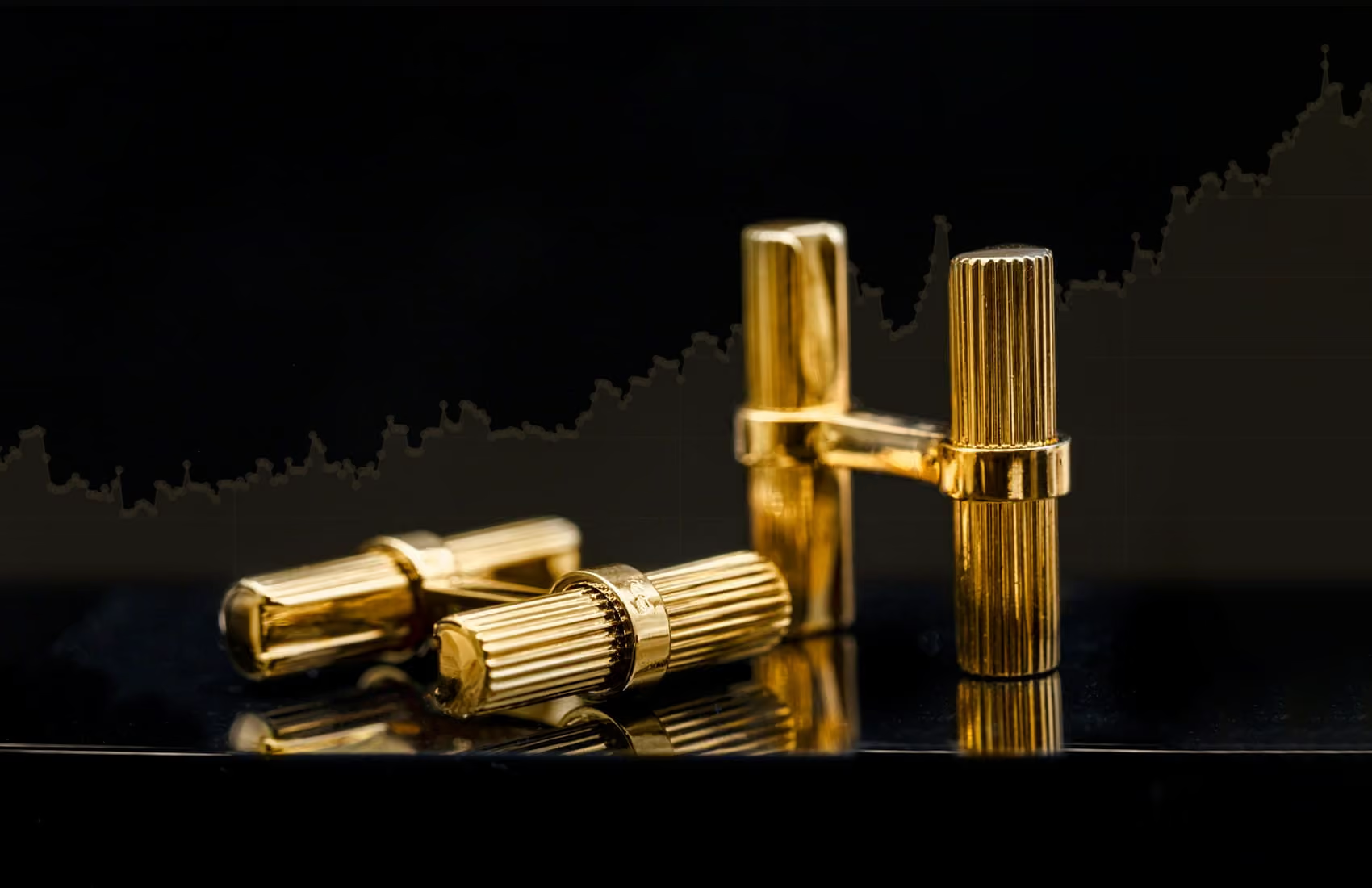
Gold jewellery: Jewellers and specialist gold dealers are often good options to sell gold jewellery. Ordinary or broken pieces are usually valued mainly on the gold spot price which can be calculated with our gold selling calculator, while designer gold jewellery may be worth more than the gold value alone.
Diamond and gemstone jewellery: Use a specialist buyer who can assess stone quality, certification, rarity and provenance. Exceptional stones may also be suitable for auction.
Costume and lower-value jewellery: General marketplaces are often the most practical option, as specialist selling channels may not add enough value to justify the process.
Different selling routes quote different types of value, so the highest figure is not always the best offer.
These figures are not directly comparable. Asking prices may never be achieved, auction estimates are not guaranteed, and consignment depends on finding a buyer. An outright offer is the amount available to you now.
How do you choose? There is no one-size-fits-all answer.
Choose a major auction house when you own something exceptional enough for competitive international bidding to create additional value and you are comfortable accepting the possibility of an unsold lot and a longer selling process.
Choose a specialist jeweller or antique jewellery dealer when their expertise closely matches what you own and you want a straightforward purchase offer.
Choose a luxury pawnbroker when you want an immediate, guaranteed sale but still need the item valued according to its true secondary-market potential rather than simply its materials.
Choose an online marketplace when you are comfortable managing the sale yourself and have the time to wait.
And for some jewellery, it is worth getting quotes from more than one type of business. The best selling option is ultimately the one that gives you the right balance between value, speed, certainty and convenience for the jewellery you actually own.
If you would like to compare your options, you can sell jewellery for cash and complete a jewellery consignment sale with us.
Start by submitting photographs and details to an auction house for an initial valuation. If the jewellery is suitable, the auction house will normally agree an estimate, reserve and selling terms with you before cataloguing it for a future sale. If bidding reaches the reserve, the item sells and the auction house pays you the proceeds after agreed fees once settlement takes place.
Auction can be better for rare, important or unusually valuable jewellery where competition between buyers may increase the final price. Selling to a specialist jeweller can be better when you want a guaranteed price and faster payment. The right choice depends on the jewellery and your priorities.
Specialist jewellery buyers, jewellers and pawnbrokers can purchase jewellery outright often allowing you to receive cash for jewellery the same day.
Jewellery value depends on the brand, age, condition, precious metals, gemstones, provenance and current secondary-market demand. It is also important to distinguish between retail, insurance and resale jewellery valuations, as they can produce very different figures.
Choose a jeweller that regularly buys and resells jewellery like yours. Ask for a valuation sending as much detail as possible about your piece with photographs. Compare the offer with other buyers, and check whether the price reflects the piece’s resale value rather than just its gold or stone content. One the price is agreed, you can often be paid the same day.